

 See My Latest Article on HelloNation
How do wood, gas, and pellet fireplaces differ?
Wood fireplaces, gas fireplaces, and pellet appliances can all provide warmth and a visible flame, but they operate in very different ways. The main differences involve fuel, heat output, ventilation, maintenance, reliability during power outages, indoor air quality, and how the installation may be viewed for home insurance purposes.
For households in Fort Mill, the choice often depends on whether the fireplace is mainly decorative, intended to supplement central heating, or expected to provide meaningful heat during winter power interruptions.
What makes a wood fireplace different?
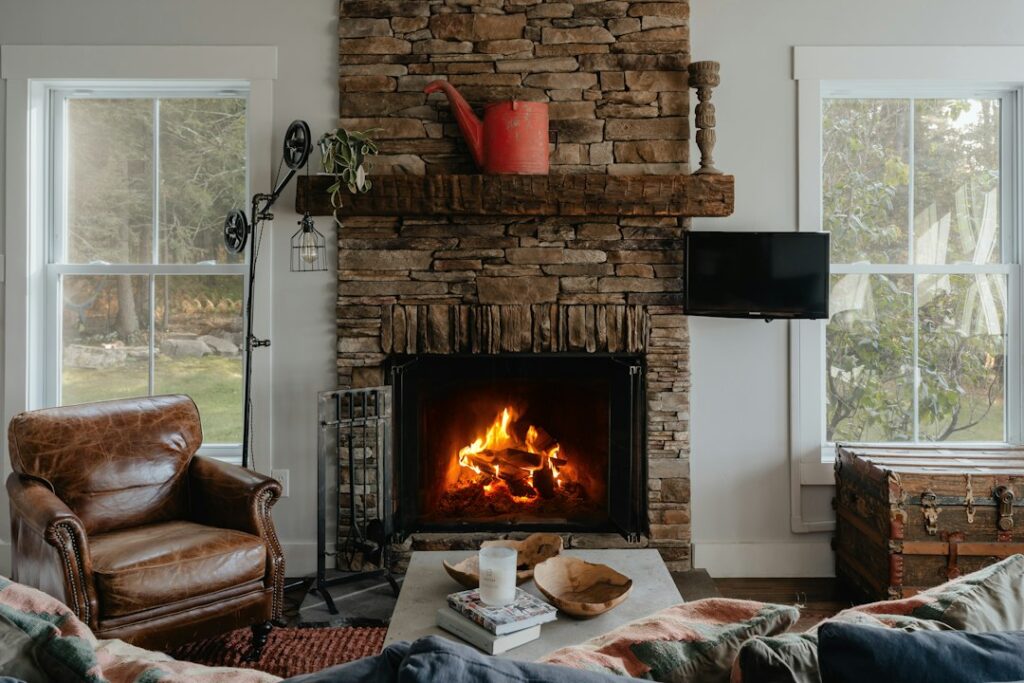
A traditional wood fireplace burns split logs in an open firebox. It offers the most familiar fireplace experience, including the sound, smell, and appearance of a natural fire. However, an open fireplace is generally less efficient as a heating appliance than an enclosed wood stove or fireplace insert.
Much of the heated air can escape through the chimney. The fire also draws air from inside the home, which may increase drafts and reduce the amount of heat retained in the room. In a tightly sealed home, poor airflow or competing exhaust fans can contribute to smoke being pulled back into the living area.
Wood fireplaces require:
- A properly constructed and maintained chimney or vent
- Dry, seasoned firewood
- Regular removal of ash
- Safe storage of logs away from the structure
- Attention to sparks, embers, and nearby combustible materials
Wood smoke contains fine particles and combustion gases. Smoke can enter the home if the flue is blocked, the damper is not fully open, the chimney draft is inadequate, or the fire is operated improperly. Burning wet or unseasoned wood can create more smoke and contribute to creosote buildup.
A modern enclosed wood-burning appliance, such as a certified wood stove or insert, is not the same as an open masonry fireplace. Enclosed appliances control the burn more effectively and generally provide more usable heat, but they still require careful installation, clearance, venting, and maintenance.
How does a gas fireplace compare?
Gas fireplaces burn natural gas or propane rather than solid fuel. They are usually easier to start and operate than wood fireplaces, and many can be controlled with a wall switch, remote, or thermostat.
A vented gas fireplace uses a chimney or approved vent system to send combustion gases outdoors. A direct-vent model typically uses a sealed combustion chamber, drawing combustion air from outside and exhausting gases through a dedicated vent. This design can reduce the effect on indoor air pressure compared with an open fireplace.
Some gas units are vent-free. These appliances do not send combustion products through a chimney, so they require strict attention to manufacturer instructions, room size, ventilation, and local code requirements. They can add moisture to indoor air and may produce combustion byproducts. A carbon monoxide alarm should be installed and maintained in any home with fuel-burning appliances.
Gas fireplaces usually produce less ash, soot, and airborne particulate matter inside the home than wood-burning fireplaces. They do not eliminate all safety concerns, however. Problems can arise from damaged glass, blocked vents, gas leaks, improper conversion, or unapproved logs and accessories.
Insurance considerations may include the type of gas appliance, whether it was installed according to applicable fuel-gas and building codes, and whether the home has been altered from its original design. A gas fireplace is not automatically treated the same way as an open wood fireplace, so accurate documentation can be useful when discussing the home’s heating systems with an insurer.
What is different about a pellet stove or pellet fireplace?
Pellet appliances burn compressed wood pellets made from processed biomass. A motorized hopper feeds pellets into the burn chamber, while fans control combustion air and distribute heat.
Pellet systems are often more consistent than cordwood because the fuel is standardized and the feed rate can be adjusted. They usually create less visible smoke than older, conventional wood-burning appliances. They also tend to provide more usable heat than an open fireplace.
The tradeoff is mechanical and electrical complexity. A pellet stove may depend on:
- Electricity for the auger, controls, ignition system, and fans
- Regular cleaning of the burn pot and ash compartments
- Properly stored pellets kept dry
- Periodic inspection of the exhaust path
- Replacement of wear components over time
A power outage can stop a pellet appliance even if the hopper is full. That makes it different from a traditional wood fireplace, which can continue operating without electricity if the chimney and firebox are safe.
Pellet appliances still produce combustion gases and require approved venting. They should not be treated as plug-in heaters simply because the fuel is manufactured and easy to handle.
Which option produces the most heat?
The answer depends on the specific appliance, room size, insulation, layout, and how the system is operated.
In general:
- An open wood fireplace is often strongest as a supplemental comfort feature rather than a whole-home heating source.
- An enclosed wood stove or insert can provide substantial heat but requires regular loading and careful fuel management.
- A gas fireplace offers convenient, predictable heat, although many decorative models are not designed to heat an entire home.
- A pellet stove can provide steady room heating, but its performance depends on electricity, fuel quality, and maintenance.

A fireplace that is oversized for the room may be operated inefficiently. A unit that is too small may be run continuously without adequately warming the space. Manufacturer sizing information and the home’s existing heating design matter more than the fuel type alone.
Which system requires the most maintenance?
Wood generally demands the most hands-on maintenance. Ash removal, chimney care, firewood handling, and creosote prevention are part of normal use.
Gas fireplaces produce little ash, but their burners, glass, vents, and connections still need inspection. A blocked or damaged vent can create a serious hazard even when the fireplace appears to be working normally.
Pellet appliances require frequent ash removal and cleaning because their combustion system contains moving parts and fans. They may need more routine attention than gas systems, even though they are cleaner and more automated than traditional wood fireplaces.
Any fireplace or solid-fuel appliance should be stopped if there are cracks, smoke leakage, unusual odors, damaged venting, missing clearances, or signs of overheating. Safety-related inspections and repairs should be handled by an appropriately qualified person, particularly when gas lines, chimney liners, electrical controls, or structural clearances are involved.
How can the choice affect home insurance?
A fireplace does not automatically make a home uninsurable or guarantee a premium change. Insurance decisions can depend on the appliance type, installation quality, age, condition, fuel source, chimney or vent design, and whether the system is professionally permitted or inspected when required.
Homeowners may be asked to disclose:
- Whether the fireplace is wood-burning, gas, or pellet
- Whether it is open, enclosed, vented, direct-vent, or vent-free
- When the chimney or vent was last inspected
- Whether the appliance was added after the home was built
- Whether permits or installation records are available
- Whether the fireplace is the primary heat source or supplemental
In Fort Mill, applicable construction and fuel-gas requirements are based on adopted South Carolina and local building codes. Code compliance does not replace insurance approval, but an installation that lacks required permits, has unsafe clearances, or uses an unapproved venting arrangement can create complications during underwriting or a claim review.
Keeping the owner’s manual, installation paperwork, inspection records, and receipts for major repairs in a home-maintenance file can make the appliance’s history easier to document.
Which fireplace is the practical choice?
The best fit depends on priorities rather than a universal ranking.
Choose wood when the experience of a real fire, fuel independence, and backup heating potential matter more than convenience and routine labor. Choose gas when easy operation, low ash, and predictable use are the priorities. Choose pellets when steady supplemental heat and automated fuel feeding are attractive, while electricity and regular mechanical maintenance are acceptable.
For any option, the safest choice is one that matches the home’s structure, ventilation, electrical capacity, available fuel storage, and intended use. A fireplace should be evaluated as part of the entire house—not as an isolated appliance.